
Environmental Impact Report (EIR)
Every order generates an Environmental Impact Report with exact figures calculated specifically for your order, not industry benchmarks.






Real numbers, for every order
When you order with Waste2Wear, we calculate the precise water, carbon and energy savings for that specific order.
Unlike an annual certificate that covers everything broadly, every single order comes with its own report showing exactly what was saved compared to using virgin materials, and exactly how much recycled plastic went into your products.
We love being able to give our partners something concrete they can actually stand behind, and the Environmental Impact Report is exactly that.
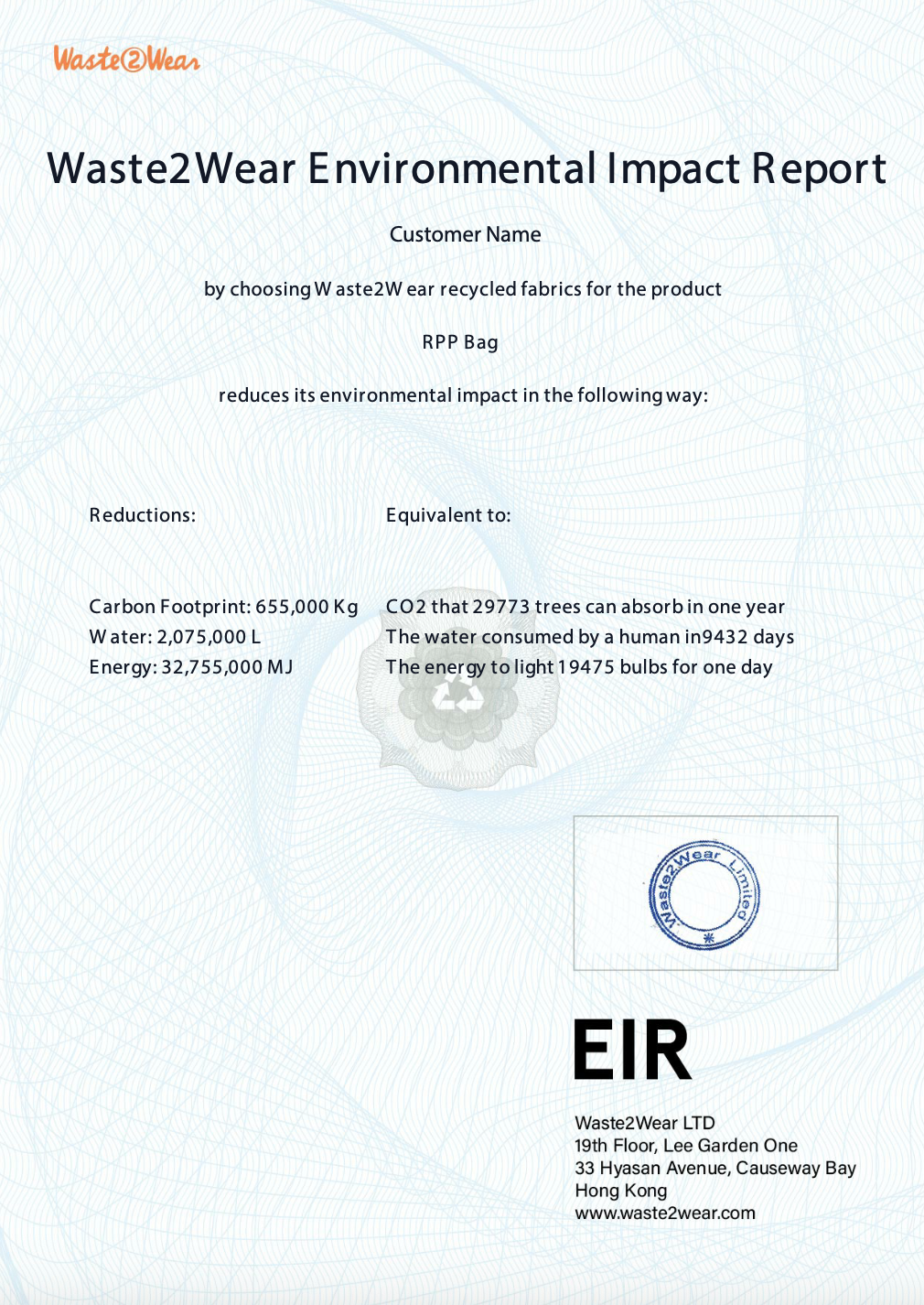
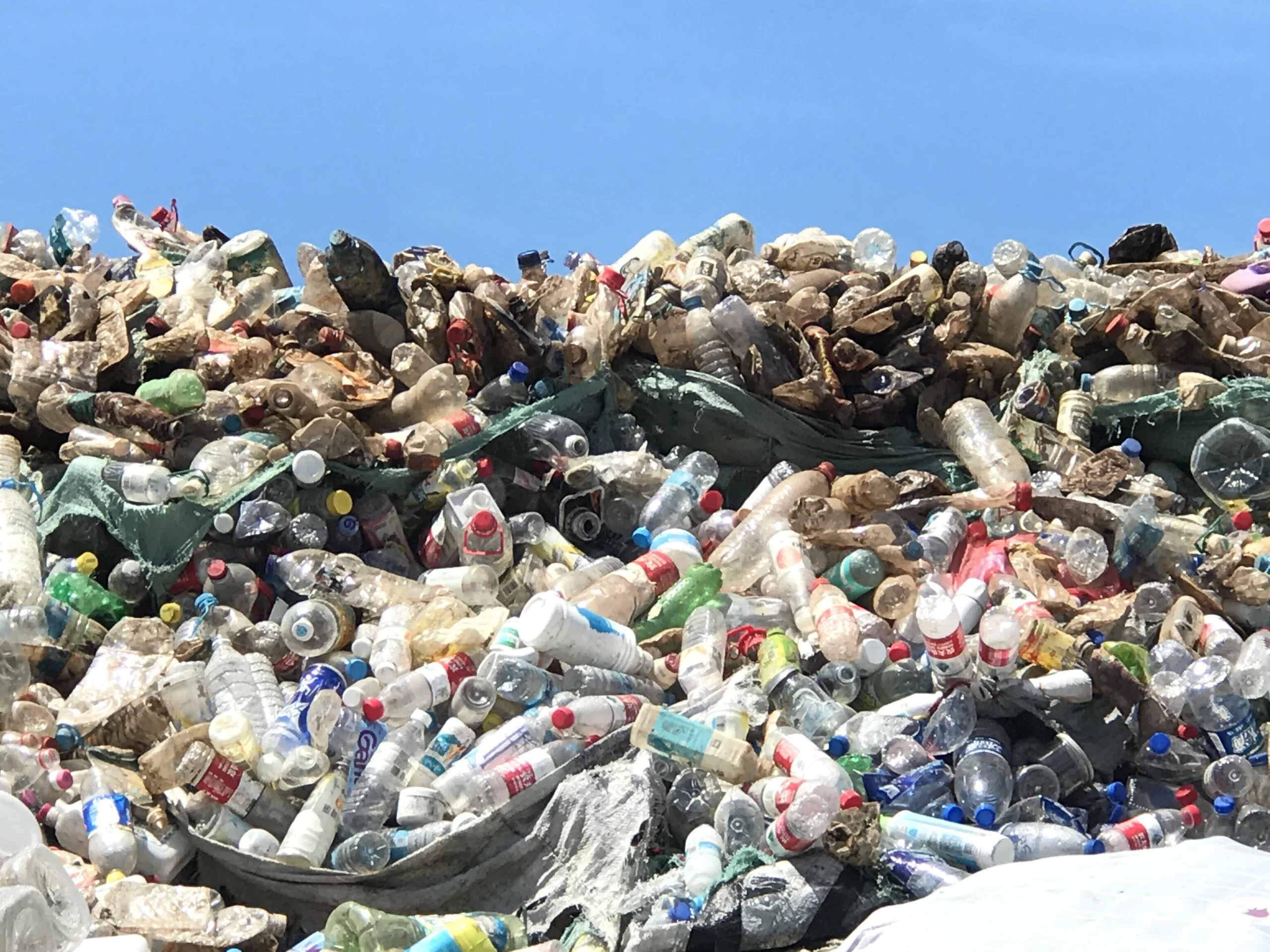
What your Environmental Impact Report contains
Every report is specific to your order. The figures reflect the actual materials used in your production run, not industry averages or annual estimates.
Your reductions
The exact reduction in plastic, carbon footprint, water and energy for your specific order, expressed in measurable units tied to your product ID and fabric spec.
Real-world equivalents
Each figure is translated into something tangible, like how many shipping containers of bottles were diverted, how many trees would be needed to absorb the same CO2, or how many years of human water consumption were saved.
Product-level traceability
Every report is tied to a specific product ID, fabric spec and order date, making the data traceable and ready to use directly in ESG reporting or stakeholder communications.
Frequently asked questions
What is an Environmental Impact Report?
Our Environmental Impact Report is a document we provide with an order that sets out the specific environmental savings of the materials used in it, calculated against the equivalent virgin material. It covers energy, water and CO2 savings, along with real-world equivalents that help translate the numbers into something easier to communicate internally.
What figures does the EIR contain?
The EIR sets out the energy, water and CO2 savings for your order compared with the equivalent virgin material, along with real-world equivalents that make the scale easier to communicate. It is tied to the product IDs and order date, so every figure traces back to something specific rather than a broad claim.
How is the EIR different from an annual sustainability certificate?
An annual certificate typically summarises activity across a whole year or a whole supplier relationship, while the EIR is issued per order and reflects that order alone. That makes it more useful when you need to report on a specific product launch or a specific purchase rather than your overall relationship with us.
Can I use the EIR in my ESG or stakeholder reporting?
Yes, the EIR is built to be used in ESG reporting and stakeholder communications. Because the figures are order-specific and tied to a product ID and date, they hold up better under scrutiny than a general sustainability statement, and several of our customers use them directly in supplier disclosures.
How does the EIR relate to Digital Product Passport requirements?
The EIR captures verified, order-specific environmental data that overlaps with the kind of information a Digital Product Passport will need to carry. As DPP requirements come into force, having this data already structured and tied to individual products puts you ahead of the documentation work rather than starting from nothing.
Do I get an EIR for every order?
Yes, we provide an EIR for every order as standard. It is not an optional add-on or something reserved for larger customers, because the figures come directly from the materials and quantities in your order rather than requiring separate work on our side.
What are the typical savings for rPET and rPP?
Our rPET uses 70% less energy, 86% less water and 75% less CO2 than virgin polyester. Our rPP uses 88% less energy, 46% less water and 71% less CO2 than virgin polypropylene. Your EIR applies these figures to the actual quantities in your order rather than reporting them as a general claim.