rPET fabrics made from 100% post-consumer plastic bottles
As an rPET fabric supplier, we produce recycled polyester from 100% post-consumer plastic bottles for brands and procurement teams that need real recycled content they can prove rather than a diluted claim. Order it as yarn, by the metre, or as a finished product, with the recycled percentage verified to an exact figure. We also produce rPP from post-consumer food containers for bags and packaging.






Our recycled polyester is made from post-consumer plastic bottles, and it can be supplied as yarn, as fabric by the metre, or built into a finished product. We develop woven and knitted fabrics around your construction, weight, colour, hand feel and performance requirements rather than around a small fixed catalogue.
Recycled content should be something you can prove rather than something written on a specification sheet, which is why our rPET can be verified through RA3 alongside GRS certification and documented supply chain traceability.
Recycled polyester developed around your product
There is no single rPET fabric, because a lightweight lining, a sportswear jersey and a heavy canvas can all begin from recycled PET while requiring very different yarns, constructions, weights and finishes. For that reason we develop rPET around the product you are making rather than asking your product to fit a standard material.
You can come to us with an existing polyester fabric, a technical specification, or an idea for a new material, and we work from there to develop the construction and performance you need using recycled polyester.

Fabric developement
We develop rPET around the product you are making rather than asking your product to fit a standard material. That can mean anything from a lightweight lining to a sportswear jersey or heavy canvas, with the construction, weight and composition developed around the end use.
Stretch & performance
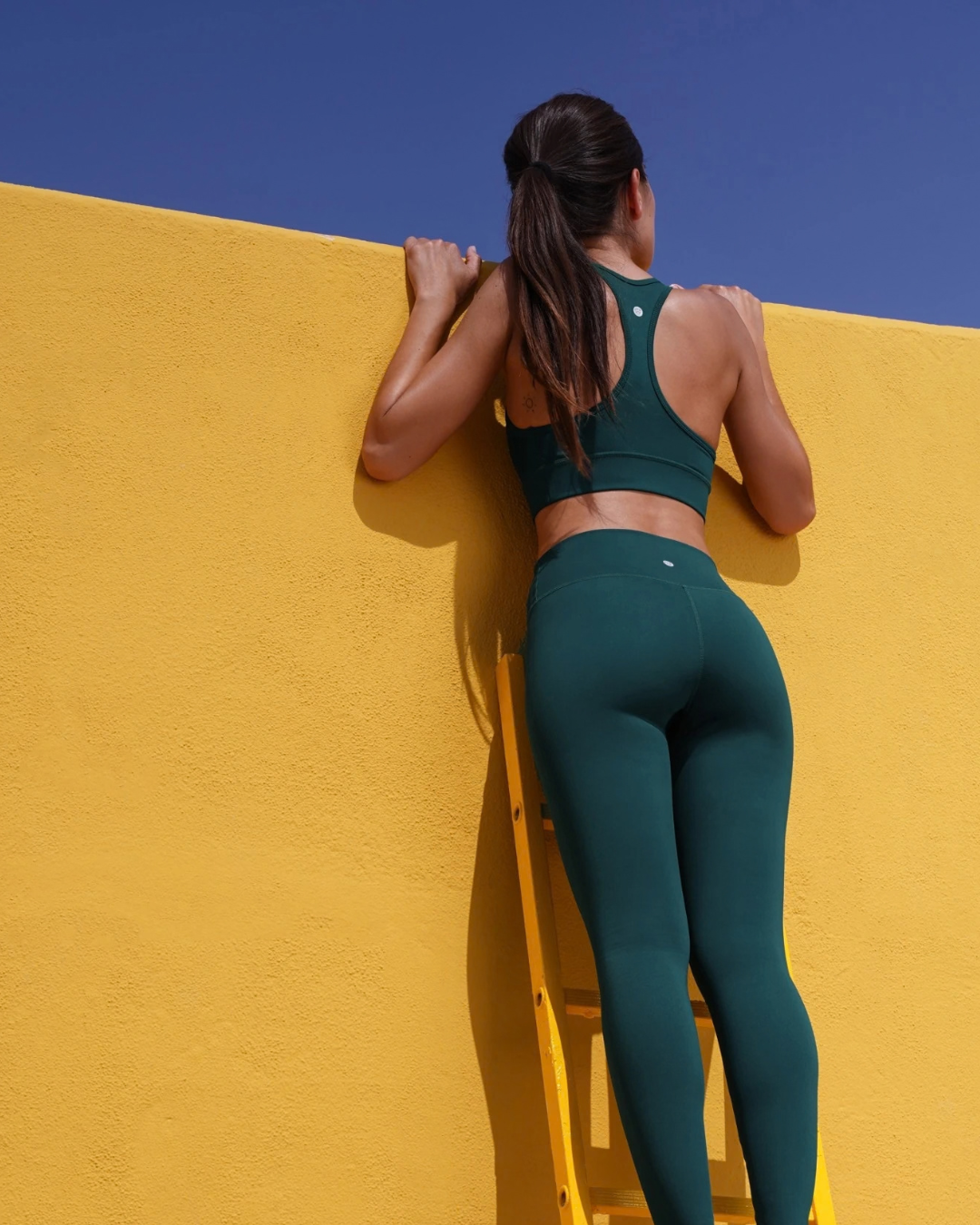
Performance is developed around what the finished product actually has to do. We can build in mechanical, two-way or four-way stretch, add functional finishes and test the fabric against the physical requirements of the application.
Colour & printing
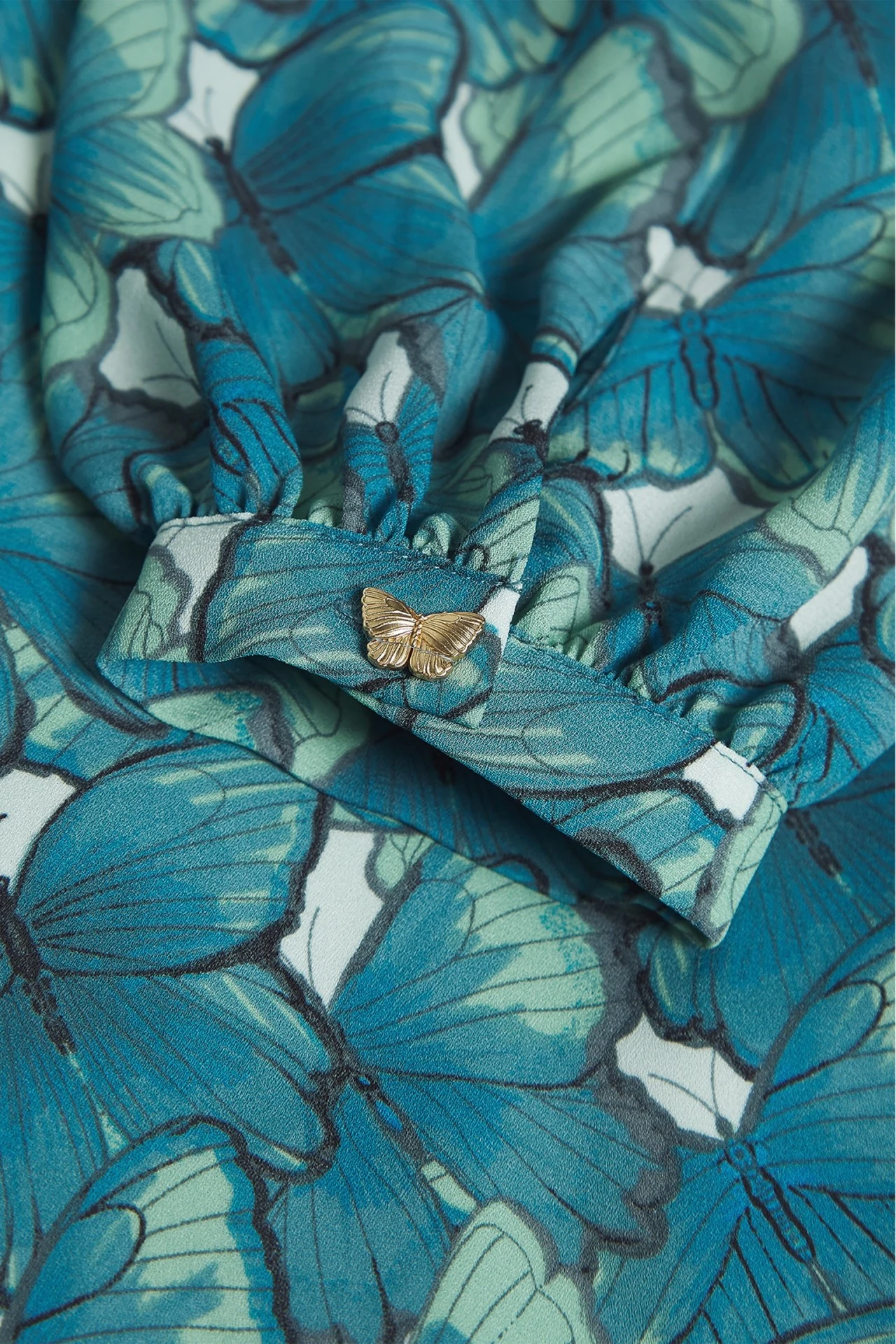
rPET fabrics can be developed in custom colours with Pantone matching, while solution and dope-dyed options are available depending on the project. Printing can then be selected around the fabric construction, finish and end use.
Yarn & production
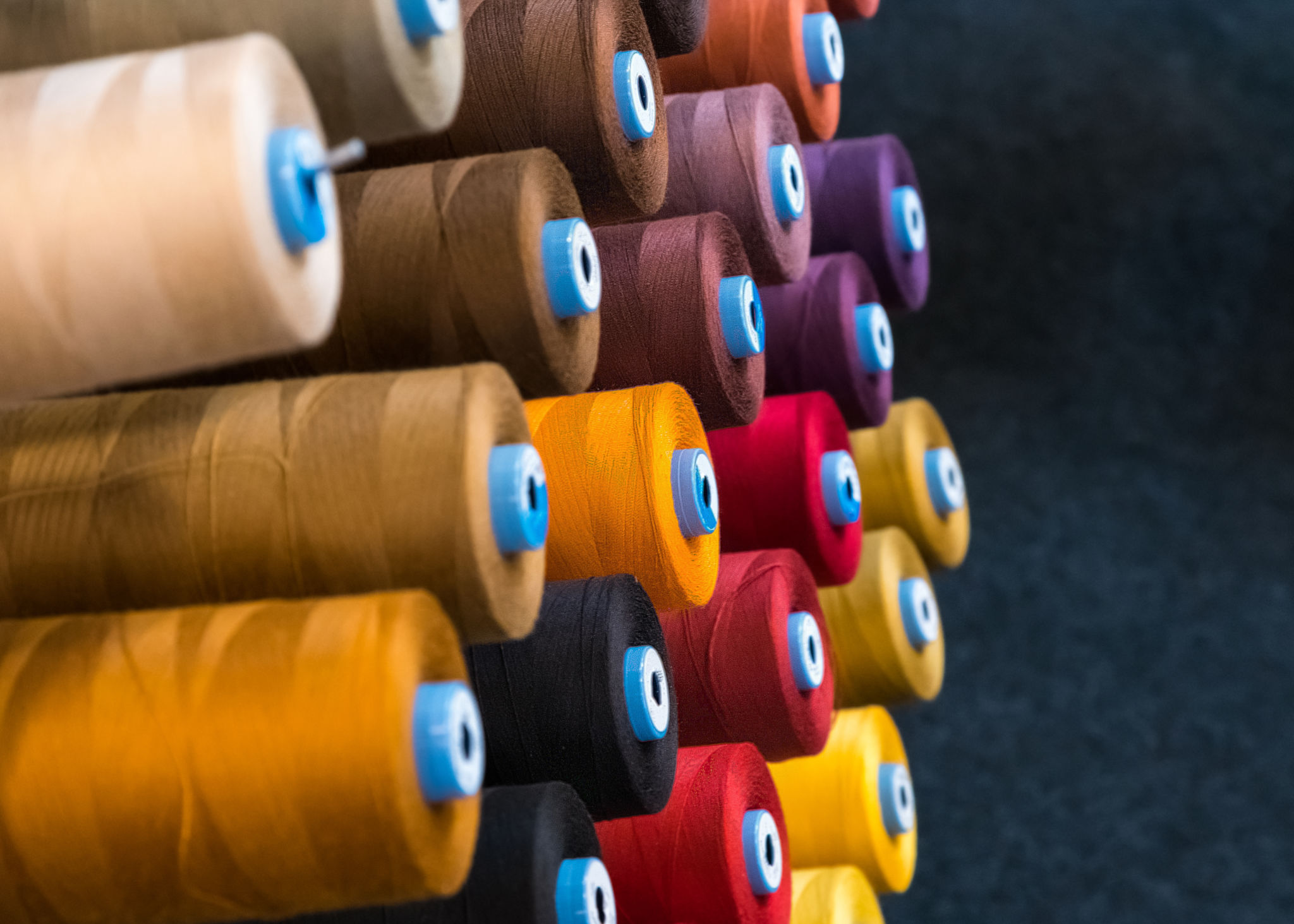
Work with Waste2Wear at the stage that fits your supply chain. Source recycled polyester yarn separately, order developed rPET fabric by the metre, or work with us through finished-product manufacturing.
From plastic bottle to rPET fabric
rPET fabric is polyester made from recycled PET, mostly post-consumer drinks bottles. Our rPET starts with bottles that have completed their original use. They are collected, sorted, cleaned and flaked, then turned back into polyester, extruded into filament, and spun into yarn that is woven or knitted to your specification. We document the material through production, so the recycled record does not stop at the recycling facility.
For a deeper look at how the process works, how rPET compares with virgin polyester and how to check a recycled claim, read our guide: What is rPET fabric?
Woven rPET fabric
We develop woven recycled polyester for applications ranging from lightweight linings to outer shells, uniforms and heavy-duty fabrics. Construction depends on what the finished product needs to do, so rather than asking you to select from a handful of standard fabrics, we can work from an existing material or technical specification and develop the rPET construction around it.
Depending on the project, that can include constructions such as twill, ripstop, oxford, taffeta and other woven structures. Typical woven weights sit around 120 to 250 GSM, although lighter and substantially heavier constructions are possible. A twill construction for uniform applications may sit around 240 GSM, while at the other end of the range a heavy canvas can reach approximately 680 GSM.
Knitted rPET fabric
Knitted rPET gives brands more flexibility for garments where softness, movement, stretch or moisture management matter. We develop knitted recycled polyester for fashion, sportswear, activewear and other apparel applications, including constructions such as jersey, interlock, mesh, fleece and other knitted structures depending on the specification.
Typical knitted fabrics fall around 180 to 360 GSM. A lightweight T-shirt fabric may sit around 160 GSM, while a sweat fabric may be closer to 280 GSM. The construction, yarn, weight, finish and stretch can all be adjusted during development, rather than treating the GSM as the specification on its own.
rPET fabric weights
There is no single standard GSM for recycled polyester, because the right weight depends on the construction and the product. As a guide, our current production capabilities include the following references.
| Application | Typical weight |
|---|---|
| Lightweight linings | 65–80 GSM |
| Woven outer-shell fabrics | 120–250 GSM |
| T-shirt fabrics | Around 160 GSM |
| Knitted fabrics | 180–360 GSM |
| Twill and uniform fabrics | Around 240 GSM |
| Sweat fabrics | Around 280 GSM |
| Heavy canvas | Up to approximately 680 GSM |
*These are production references rather than a fixed catalogue, and custom weights can be developed around the requirements of the product. If you already have a target fabric, send us the existing GSM together with the construction and hand-feel requirements, and we can use that as the starting point.
Used by the world's leading companies
"Waste2Wear has produced the uniforms for our rangers in Tanzania that are not only environmentally friendly by removing tons of plastic trash from our landfills, but they have also a positive impact in terms of reduced carbon emissions, water wastage and energy consumption."

Marjolein Lankhout, The Jane Goodall Institute
Stretch and accurate composition claims
Work with Waste2Wear at the stage that fits your supply chain. Source recycled polyester yarn separately, order developed rPET fabric by the metre, or work with us through finished-product manufacturing.
Finishes and treatments
Recycled content is only one part of a fabric specification. Depending on the construction and intended application, we can develop rPET fabrics with finishes and performance characteristics including water repellency, quick-dry performance, moisture management, anti-odour and antibacterial treatments, UV protection, brushed and peach finishes, coatings, laminations and flame-retardant treatments. Our fabrics and treatments are PFAS-free.
The finish is selected around what the final product actually has to do, whether that means repeated washing, outdoor exposure, moisture management, a particular hand feel, or another technical requirement.
Colour, dyeing and printing
rPET fabrics can be developed in custom colours, with Pantone matching available where the required minimum colour quantity is reached. Depending on the project, we can work with conventional custom dyeing as well as solution or dope-dyed options.
Printing methods include:
- screen printing
- transfer printing
- rotary printing
- digital printing
Some stock colours are also available for selected lining fabrics. Colour and printing requirements are reviewed alongside the construction, because the material, weight, finish and print process all influence the final result.
Fabric testing built around the end use
A recycled fabric still has to work as a fabric, so we test physical performance according to the requirements of the finished product rather than assuming that recycled content is enough on its own.
Testing capabilities include tensile strength, tear strength, abrasion resistance, pilling, colourfastness, shrinkage, dimensional stability and wash durability. Our routine fabric testing includes shrinkage, tear strength, seam slippage, pilling, and colourfastness to rubbing and washing under both wet and dry conditions where relevant.
The exact testing programme is agreed around the product and its intended use, because the priorities for a fashion lining may be very different from those for a uniform that is washed repeatedly or an activewear fabric exposed to stretch, moisture and abrasion.
Working with us as your recycled fabric supplier
As a recycled fabric manufacturer we supply at two stages. You can buy recycled yarn and fabric by the metre and run your own production, or hand the whole build to us and take delivery of finished products. Both routes draw on the same verified rPET and rPP base, so the material story does not change depending on how much of the process you keep in house.
Most new projects begin with a fabric reference or technical specification. We can develop the construction, GSM, hand feel, colour, finish and performance characteristics around the product you are making rather than asking you to design around a fixed fabric range.
Depending on the application, that may mean a lightweight 65–80 GSM lining, a 120–250 GSM woven outer shell, a 160 GSM T-shirt fabric, a heavier knitted construction or even canvas up to approximately 680 GSM.
Once the fabric specification has been developed and sampled, we confirm minimum order quantities and production lead times for that construction, colour and finish.
rPET yarn as well as finished fabric
Not every brand needs us to make the finished textile, so we can also supply recycled polyester yarn separately for companies that want to run their own fabric production.
Filament yarn is available, along with a broad range of deniers and yarn counts depending on the end use, and textured yarn options can also be developed. For projects requiring staple or spun yarn, availability can be discussed around the individual specification.
This gives brands and textile manufacturers two routes. You can source the recycled yarn and keep fabric production in your existing supply chain, or you can work with us through fabric development and finished production.
How we compare to a typical recycled fabric supplier
Recycled fabric is not a single standard. The same label covers material that is fully post-consumer and verified, and material that is mostly virgin with an untested claim on top. Here is where we sit against a typical supplier.
The environmental case, with real numbers
We do not describe our recycled fabric as sustainable without attaching a number to the claim. Compared with virgin polyester, our rPET uses 70% less energy, 86% less water, and produces 75% less CO₂. Compared with virgin polypropylene, our rPP uses 88% less energy, 46% less water, and produces 71% less CO₂.
Those figures matter more against the context of what else is on the market. Most competitors satisfy only a 20% recycling requirement in their claimed recycled content, which means the majority of what they sell as recycled fabric is still virgin material. Our full post-consumer sourcing, 100% for rPET and food-container-only for rPP, is the differentiator here, not a marketing claim layered on top of an ordinary product.
Our Environmental Impact Report gives you those numbers for the item you actually made.
70%
less energy used
86%
less water used
75%
less CO₂ emitted
Figures for rPET, measured against virgin polyester production
Most of the line, not one collection
Fabienne Chapot has moved the majority of its polyester across to fabric made from recycled bottles. Each new fabric has its own optics and handfeel to develop before it can replace the virgin equivalent, so the work is continuous rather than a launch.
From streetwear to luxury fashion
Our materials go into fashion apparel, sportswear, and reusable bags, among other applications. In apparel, that spans everyday wear, outerwear, and linings. In sportswear, it covers base layers, team kit, and technical outerwear, where the fabric needs to perform as well as carry a verified recycled story. In bags, our rPP is the more common choice, built into totes and structured carriers that need more rigidity than a polyester-based fabric provides.
Fashion and apparel
We supply recycled fabric and yarn for fashion brands building everyday wear, outerwear, and linings, all from rPET made with 100% post-consumer plastic bottles. It behaves like the polyester your patterns already use, so a verified recycled story slots into your range without changing how a garment is designed or made.
Sportswear and performance
Our recycled sportswear fabric is engineered for stretch, moisture management, and durability through repeated washing, and it matches virgin polyester on performance while starting from 100% post-consumer plastic bottles. It comes by the metre or as finished products, with the same RA3 verification applied across the range.
Bags and other applications
Beyond apparel, we produce recycled material for reusable bags and other products, using rPP sourced entirely from post-consumer food containers where its strength suits the build better than a polyester fabric would. Whatever the application, the same verified content and certification stack sits behind it.
One material, several ways to source it
You can work with Waste2Wear at the stage that suits your supply chain. You can source recycled polyester yarn and keep textile production with your existing partners, you can order developed rPET fabric by the metre and run your own cut-and-sew production, or you can hand us the complete product and have Waste2Wear manage fabric development, manufacturing, verification, traceability and environmental reporting through to the finished order. The recycled material stays at the centre of all three routes.
Frequently asked questions
What are Waste2Wear's recycled fabrics made from?
Waste2Wear's recycled fabrics are made from two post-consumer sources: rPET from 100% recycled plastic bottles, and rPP nonwoven from recycled food-grade packaging. Our rPET fabrics are made from 100% recycled plastic bottles, processed into yarn that is woven or knitted into finished textiles. Our rPP nonwoven is made from recycled polypropylene recovered from post-consumer food-grade packaging. Both keep used plastic in productive use rather than sending it to landfill or incineration.
Where can I buy rPET fabric?
Waste2Wear supplies rPET fabric and yarn by the metre, as well as finished products. Fabrics are developed around your construction, weight, colour and finish, and minimum order quantities and lead times are confirmed after sampling. For background on the material itself, read our guide: What is rPET fabric?
What is the environmental impact of recycled fabric?
Recycled fabric carries a much lower environmental impact than its virgin equivalent. Our rPET uses 70% less energy, 86% less water and 75% less CO2 than virgin polyester, and our rPP nonwoven uses 88% less energy, 46% less water and 71% less CO2 than virgin polypropylene. Choosing recycled material also keeps post-consumer plastic in productive use rather than sending it to landfill.
How do you verify the recycled content of your fabrics?
We verify recycled content using RA3, our patent-pending in-house testing method that measures the precise percentage of recycled material in a product. The methodology has been validated by Wessling, an independent laboratory, and third-party verification of individual products is available on request. This matters because many recycled textiles on the market only meet a 20% recycling requirement, and RA3 shows you exactly what you are getting.
What certifications do Waste2Wear fabrics carry?
Our fabrics are produced under GRS, the Global Recycled Standard, which certifies recycled content and responsible production. All of our factories are additionally certified to BSCI, GOTS and RDS standards, covering social compliance, organic textile handling and responsible down sourcing. Together these give brands documented assurance across both the material and the conditions it was made in.
Can I order custom colours and fabric weights?
Yes. We develop recycled fabrics around the requirements of the finished product rather than working only from fixed weights and colours.
Our current production ranges include lightweight linings around 65–80 GSM, woven outer-shell fabrics around 120–250 GSM and knitted fabrics around 180–360 GSM, with heavier constructions such as canvas reaching approximately 680 GSM. Custom weights can also be developed.
Custom dyeing and Pantone colour matching are available, along with solution or dope-dyed options. Printing capabilities include screen, transfer, rotary and digital printing.
Are you a recycled fabric manufacturer or a supplier?
Both. We manufacture our own recycled fabric from post-consumer plastic and supply it directly, which means there is no trading layer between you and the factory. You can order recycled yarn and fabric by the metre, or have us manufacture finished products end to end. Because we control production, we can verify recycled content at source rather than passing on a claim made further up the chain.
Can you test rPET for recycled content?
Yes. Our rPET testing method is RA3, developed in-house and patent-pending, which returns a precise recycled content percentage rather than a range. Wessling validates the methodology and independent third-party testing is available on request. You can also send us your own product for an rPET test as a separate service, whether or not the material came from us.
How does traceability work on the finished product?
Every finished product carries a QR code that links to its full supply chain story, from where the plastic was collected through to how it was processed and manufactured. That information is recorded on blockchain, which makes it tamper-proof and permanently accessible. The result is traceability you can show to customers, auditors and regulators rather than simply claim.
Can recycled fabric be used for fashion and sportswear?
Yes, recycled rPET fabric is well suited to both fashion and sportswear. It offers the same durability, dyeability and moisture-wicking performance as virgin polyester, which makes it equally at home in high-end fashion collections and in performance activewear. Brands use our rPET across streetwear, tailored apparel and technical sportswear, with full certification and traceability on every product.
What is rPP nonwoven used for?
rPP nonwoven is used mainly for reusable shopping bags, packaging and other durable everyday applications. Made from recycled polypropylene, it is lightweight, strong and fully traceable, which makes it a practical choice where you need resilience without weight. Compared to virgin polypropylene, our rPP uses 88% less energy, 46% less water and 71% less CO2 to produce.