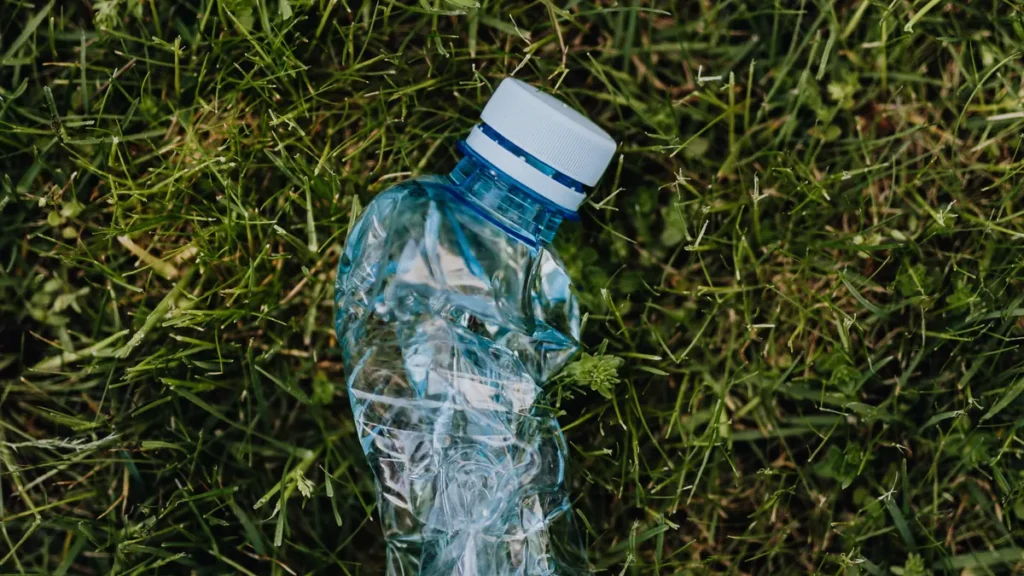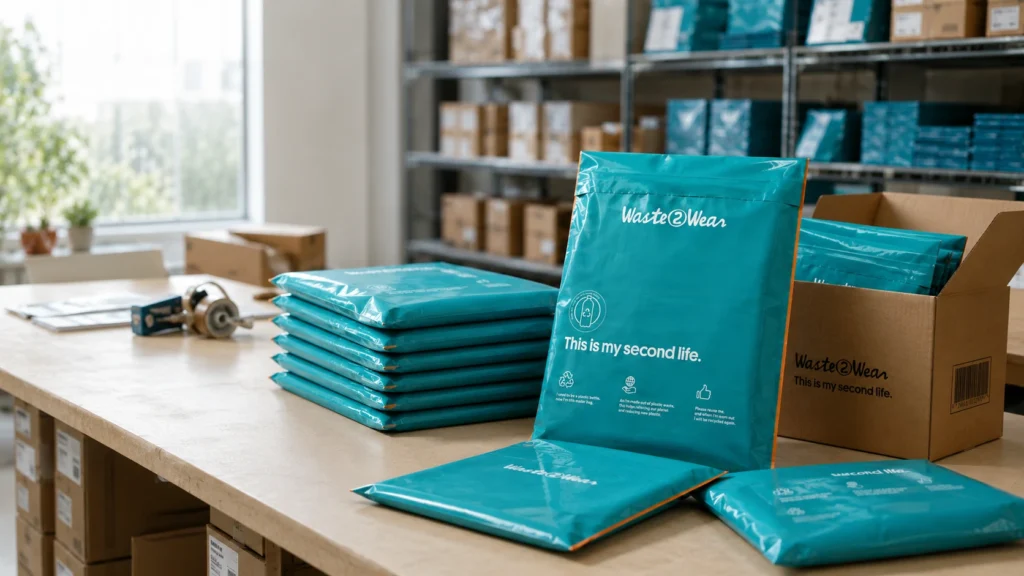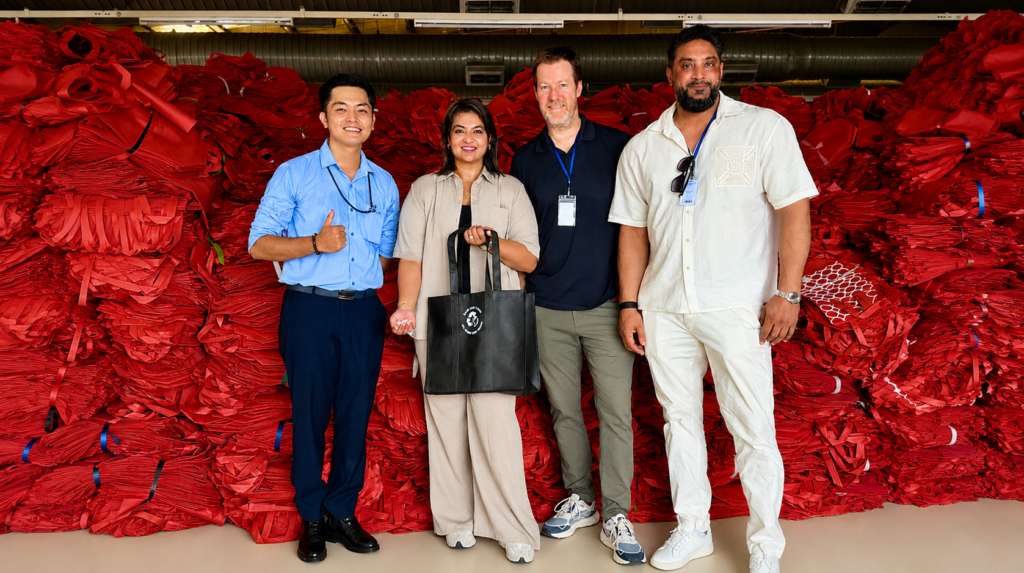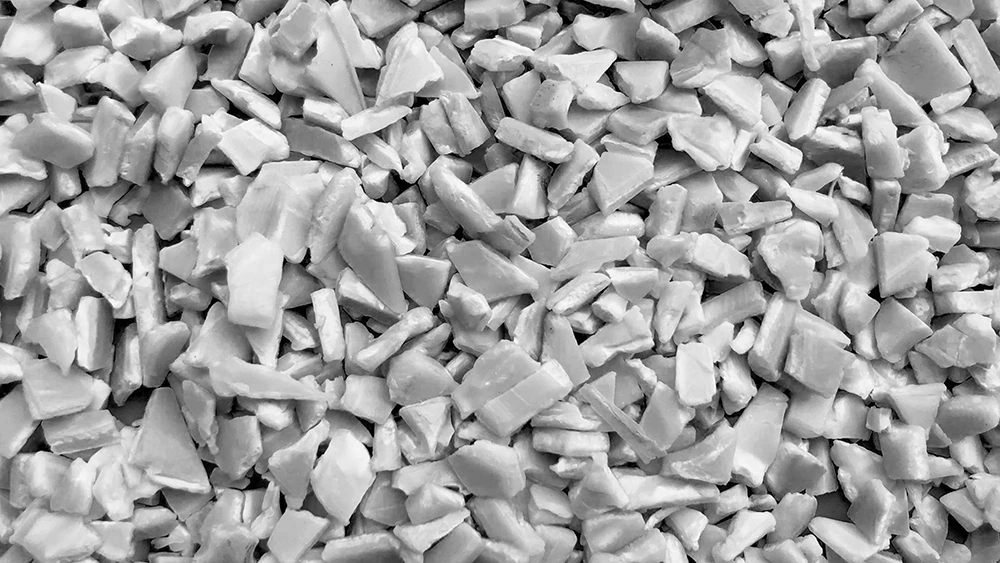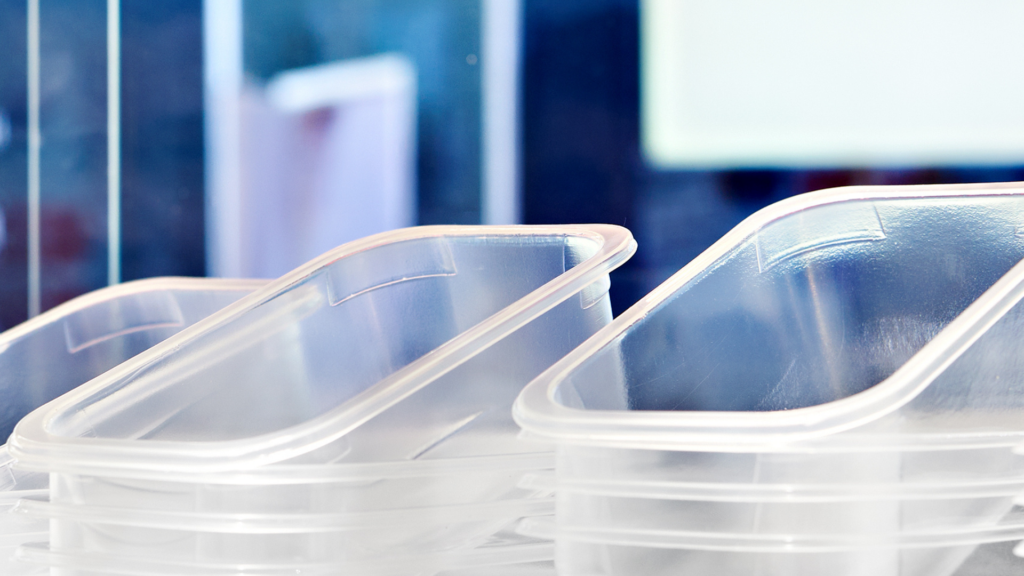
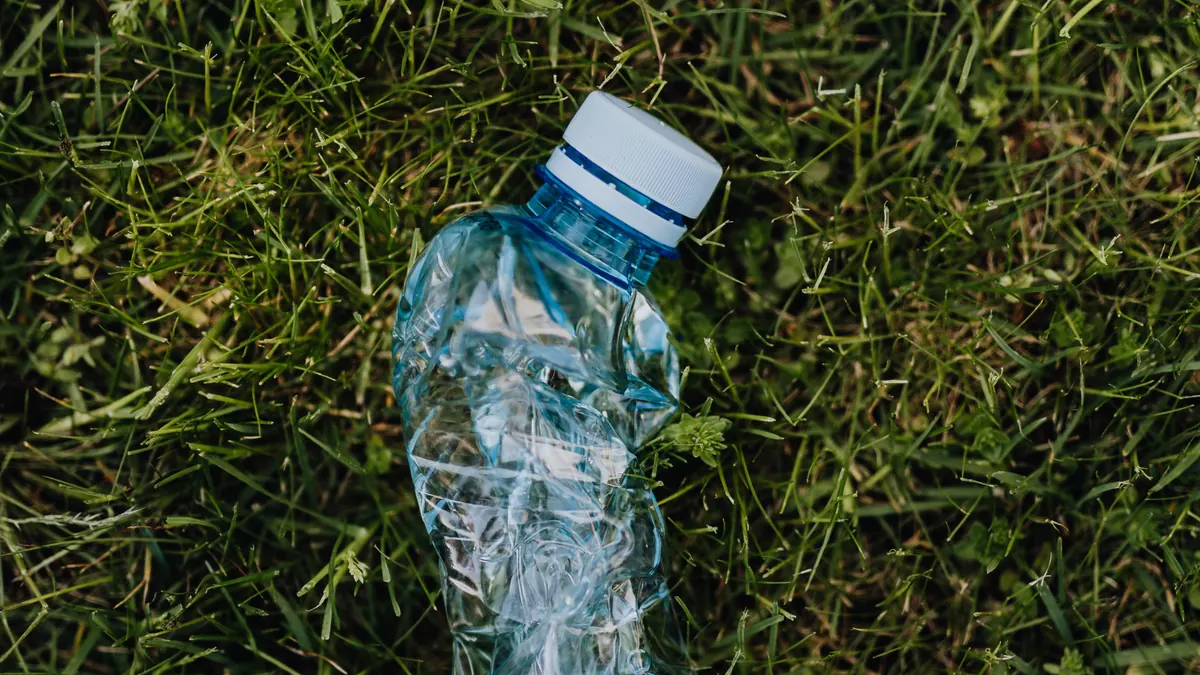
rPET fabric is polyester fabric made from recycled polyethylene terephthalate (PET), the same plastic used for drinks bottles. Almost all of it is made from post-consumer bottles that are collected, washed, cut into flakes, melted and spun into new yarn. It is the same polymer as virgin polyester, which is why it performs like virgin polyester. It is also why you cannot tell the two apart by looking at, or touching, the finished fabric.
This guide is for brands and buyers sourcing recycled fabric. It explains how bottles become fabric and where quality is won or lost along the way. It covers how rPET compares with virgin polyester, what the published climate figures actually mean, and the growing debate over using bottles for textiles. It also covers microplastics and how to check that a fabric contains the recycled content it claims. Waste2Wear is an rPET fabric supplier and manufacturer of finished products, so where we describe what happens in production, we are describing our own work.
The short version
- rPET and virgin polyester are the same polymer. The difference is where the raw material came from, and that cannot be seen in the fabric.
- About 98% of recycled polyester is made from plastic bottles. Less than 1% of the world's fibre comes from recycled textiles.
- Climate figures for rPET vary widely because studies measure different things. Always ask what a number covers.
- A certificate tells you a supply chain is audited. Only a product-level test tells you what is in the fabric you received.
What rPET actually is
PET stands for polyethylene terephthalate. In packaging it is called PET, and when it is spun into fibre it is called polyester. They are the same material. rPET is simply recycled PET, and in textiles the terms "rPET fabric" and "recycled polyester" are used for the same thing.
Polyester is the most produced fibre in the world. According to Textile Exchange's Materials Market Report 2025, polyester made up 59% of global fibre production in 2024, about 78 million tonnes. Recycled polyester accounted for about 9.3 million tonnes, or roughly 12% of all polyester. That share fell slightly from 12.5% in 2023, because virgin polyester production grew faster than recycled. The same report states that about 98% of recycled polyester is made from plastic bottles.
Mechanical and chemical recycling
There are two ways to turn PET waste back into fibre, and they are often confused.
- Mechanical recycling washes, shreds and melts the plastic, then spins it into new fibre. The polymer chains are not broken down. Almost all rPET fabric on the market today is made this way.
- Chemical recycling breaks the polymer down into its chemical building blocks, purifies them and rebuilds the polymer. It can handle dyed and mixed textile waste that mechanical recycling cannot. It also uses more energy and chemicals and is still a small part of the market.
Some guides describe bottle-based rPET as being broken down and rebuilt chemically. For most bottle-based rPET that is not what happens, and the distinction matters for any claim you make about the material.
Post-consumer and pre-consumer
Post-consumer material has been used by a consumer and thrown away, as with a drinks bottle. Pre-consumer material is waste from manufacturing, such as offcuts or rejected production. Both count as recycled, but they are not interchangeable in a product claim. Waste2Wear's rPET fabrics are made from post-consumer plastic bottles.
Why rPET is made from bottles, not old clothes
Bottles are made of one polymer, they are mostly clear or lightly tinted, and they are collected in huge volumes. Clothing is the opposite. A single garment can combine polyester with cotton or elastane, plus dyes, coatings, prints, zips and labels. Separating all of that is what makes textile-to-textile recycling hard, and it is why less than 1% of global fibre currently comes from recycled textiles.
There is also a technical reason bottles work well. PET quality is often measured by intrinsic viscosity, which indicates how long the polymer chains are. According to Anton Paar's application data, bottle-grade PET typically sits at 0.70 to 0.78 dL/g, while fibre-grade PET sits at 0.40 to 0.70 dL/g. Every time PET is melted, some chain length is lost. Bottle PET starts with enough headroom to lose some and still spin into strong fibre.
Colour also matters. Clear bottles give a neutral base that can be dyed almost any shade, and light blue bottles are close behind. Green and brown bottles limit you to darker colours. Packaging Europe's summary of a 2022 Eunomia study notes that textile makers prefer clear and light blue bottles for exactly this reason.
From bottle to fabric, and where quality is won or lost
Most guides list the steps from bottle to fabric. What they rarely explain is what goes wrong at each step, which is what decides whether rPET fabric performs like virgin polyester or falls short of it. Here is the process for mechanically recycled rPET, with the quality risk at each stage.
- Collection and baling. Used bottles are collected, through deposit return schemes or general recycling, and pressed into bales. Collection systems vary widely in what they deliver. In the EU, countries with deposit return schemes collect about 96% of PET bottles, compared with 48% in countries without them, according to the 2022 Eunomia study. Deposit schemes also deliver cleaner bottles.
- Sorting. Bales are broken open, and the bottles are sorted by polymer and colour, usually with near-infrared sorters followed by manual checks. The biggest risk here is other plastics getting through. PVC is the classic contaminant, because it degrades at the temperatures used to melt PET and can cause discolouration and dark specks in the yarn.
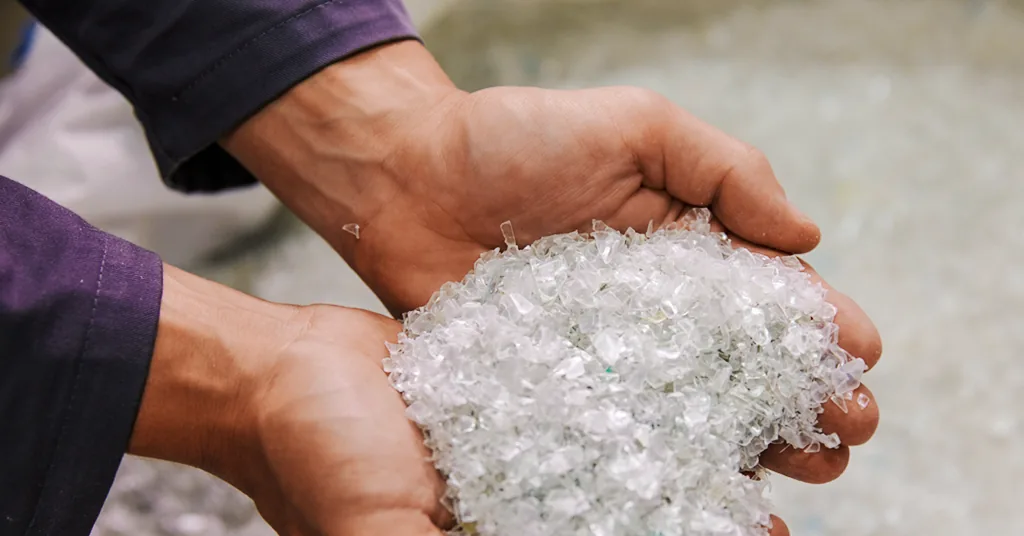
- Grinding and separation. Bottles are ground into flakes. Caps and labels are usually made of polyolefins such as PP and PE, which float in water while PET sinks, so they can be separated in water tanks.
- Hot washing. Flakes are washed hot to remove glue, drink residues and dirt. Washing quality shows up later as yellowing, odour or impurities in the yarn.
- Drying. This step looks minor but matters a great deal. PET absorbs moisture, and if wet flake is melted, the water breaks down the polymer chains. The result is weaker yarn that breaks more often during spinning and weaving.
- Melting and filtration. Dry flake is melted and pushed through fine filters that catch remaining particles. Some producers first turn the flake into pellets, known as chips, which makes the material more uniform and lets its chain length be rebuilt before spinning. Others spin directly from flake.
- Spinning. The melt is pushed through spinnerets to form filaments. These become either continuous filament yarn, which is stretched and often textured, or staple fibre, which is cut short and spun into yarn the way cotton is. Pigment can be added to the melt at this stage. This is called dope dyeing or solution dyeing, and it locks colour into the fibre.
- Fabric forming. Yarn is woven into constructions such as twill, ripstop or canvas, or knitted into jersey, interlock, mesh or fleece.
- Dyeing and finishing. Fabric that was not dope dyed is dyed and printed. It then receives any finishes it needs, such as water repellency or moisture management. rPET can take up dye slightly differently from one lot to the next, so a lab dip for each production lot is good practice rather than a formality.
At Waste2Wear, we document the material through each of these stages where we make the product. We also test recycled content with our RA3 method weekly, across multiple production stages, rather than only on the finished fabric.
rPET vs virgin polyester
Well-made mechanically recycled rPET performs like virgin polyester in most apparel, bag and uniform uses. The differences are mostly about consistency, colour and price, not strength.
| rPET (mechanically recycled) | Virgin polyester | |
|---|---|---|
| Polymer | PET | PET |
| Raw material | Mainly post-consumer bottles | Chemicals made from crude oil and natural gas |
| Strength and durability | Comparable when feedstock, drying and filtration are well controlled | The reference point |
| Consistency between lots | Slightly more variation, because the feedstock varies | Very consistent |
| Colour | Clear-bottle rPET can have a faint tint, so bright optical whites take more care. Dope-dyed darks work very well. | Brightest whites |
| Price | Usually higher, because recycled flake competes with bottle makers | Tracks oil and gas prices |
| Recyclable at end of life | Yes, the same as virgin polyester | Yes |
| Can you tell them apart in the fabric? | Not by look, feel or a standard fibre identification test |
Two common claims need correcting. Some guides say rPET wicks moisture and dries faster than cotton, as if that were a benefit of recycling. It is a property of polyester in general, and it depends on yarn and fabric construction. Others say rPET always costs less to produce. In practice, recycled flake has often cost more than virgin material, because drinks companies face legal recycled-content targets and bid for the same clean bottles. Packaging Insights reported in 2022 that rPET prices had more than doubled in a single year.
What the environmental numbers actually mean
If you compare a few rPET guides, you will find energy savings quoted at anything from about 33% to 85%. CO₂ reductions vary just as widely. None of these is necessarily wrong. They measure different things, and the source rarely says what.
Why the figures vary so much
- Allocation. Most life cycle assessments (LCAs) use the "cut-off" approach, where the recycled material carries none of the environmental burden of making the original bottle. That is the method required by both the Higg Materials Sustainability Index and the EU's Product Environmental Footprint, according to Textile Exchange's 2026 polyester LCA. It is a legitimate convention, but it is a choice, and it flatters any recycled material.
- Electricity. Mechanical recycling runs mostly on electricity, so a recycler on a coal-heavy grid can lose much of the advantage. The same Textile Exchange study names electricity as a significant contributor for mechanical recycling and recommends renewable energy.
- What is being measured. A result for a kilogram of PET chips is not a result for a kilogram of dyed and finished fabric. The Textile Exchange study reports chips, staple fibre and two yarn types separately.
- Transport and chemicals. Long feedstock transport and the surfactants used for washing both add impact.
The spread shows up in published results. A 2023 LCA by a large recycled-yarn producer, reviewed by a third party to ISO 14044, found greenhouse gas emissions about 42% lower than virgin for recycled filament yarn and about 60% lower for staple fibre, as reported by FashionUnited. In 2022, a study from China reported the opposite, with recycled polyester emitting almost ten times more CO₂ than virgin. It attributed the result to energy-intensive cleaning and drying, and Apparel Insider urged caution because it contradicted earlier research. The 2026 Textile Exchange study is blunt on this point, stating that "simplistic rankings or claims based on these results should not be made."
How to read any rPET figure
A single average can only tell you so much. For finished Waste2Wear products, we issue an Environmental Impact Report for each order, with figures specific to that item, so buyers see numbers for what they actually bought.
Whoever you buy from, ask these questions about any environmental figure:
- Which study is it from, and who reviewed it?
- What is the unit: chips, yarn, fabric or a finished product?
- Where does the system boundary stop?
- Which allocation method was used?
- What electricity mix was assumed?
The answers are no longer optional in the EU. Since 27 September 2026, the Empowering Consumers Directive has banned generic environmental claims that cannot be backed by recognised evidence, and specific claims that mislead remain prohibited. Our guide to EmpCo and green claims for recycled textiles covers what that means for product copy.
Is fabric from bottles circular? The debate buyers should know about
Making fabric from bottles is open-loop recycling. The bottle becomes a fabric, and that fabric rarely becomes a bottle or another fabric again. This used to be a footnote. It is now one of the most contested questions in EU circularity policy, and anyone specifying rPET should understand both sides.
The case against
Drinks companies need recycled PET to meet legal targets. The Single-Use Plastics Directive requires PET drinks bottles to contain 25% recycled plastic from 2025 and 30% from 2030. The Packaging and Packaging Waste Regulation adds recycled content targets for other plastic packaging. Beverage industry groups argue that textiles divert clean bottle flake away from bottle-to-bottle recycling. In 2022 they said that beverage packaging supplied over 70% of recycled PET but received only about 30% of it, according to Packaging Insights.
The European Commission has taken a similar line. Its position, as cited by Recycling Europe, is that using PET bottles for apparel is not aligned with the closed-loop system designed for food-grade plastics. Textile recyclers are now pushing for this to be written into law. The EU's ecodesign rules for textiles, under the Ecodesign for Sustainable Products Regulation, were still being drafted in 2026. Recycling Europe has proposed recycled-content targets of 10% in 2028, 15% in 2030 and 30% in 2035, with rising shares from European post-consumer textile waste. It has also argued that bottle-derived content should not count at all, as reported by Texspace Today. The Commission has not decided either point yet.
The case for
Not every collected bottle can become a new bottle, and many bottles are never collected. The 2022 Eunomia study found that the average EU collection rate for PET bottles was 60%. It also estimated that around 40% of bottles placed on the market ended up landfilled, incinerated or lost to the environment, as summarised by Packaging Europe. Textile-to-textile recycling is not yet available at the scale or consistency needed to replace bottles as a feedstock. Today, bottle-based rPET is the recycled polyester that can actually be produced, verified and supplied in volume.
Where Waste2Wear stands
Our view is practical. Billions of plastic bottles already exist, and more are made every day. Every bottle turned into a durable product is one less in landfill, an incinerator or the environment. The 2022 Eunomia study estimated that around 40% of the PET bottles placed on the EU market still end up that way. Bottle-to-bottle recycling should have first call on the bottles it can use. But until collection and recycling reach every bottle, turning the rest into fabric that lasts for years is a far better outcome than throwing them away. We are also clear about what it is not. Fabric made from bottles is not closed loop, so we do not call it that, and where a product allows it, we keep fabrics mono-material so they can enter textile-to-textile recycling as it scales up.
For buyers, this has two practical consequences. First, avoid describing bottle-based fabric as "circular" without qualification. Say what it is made from and how much. Second, if you plan ranges for 2028 and beyond, watch the ecodesign rules for textiles, because they may treat bottle-derived recycled content differently from textile-derived content.
Does rPET shed more microplastics?
All polyester fabrics shed microfibres when washed, whether virgin or recycled. Whether recycled polyester sheds more is genuinely disputed.
- In 2023, The Microfibre Consortium tested 251 fabrics from 36 brands using its own test method. It found mechanically recycled polyester to be no more likely than virgin polyester to shed microfibres. The data on chemically recycled polyester was too limited to draw a conclusion, as reported by Ecotextile News.
- In December 2025, the NGO Changing Markets published a report based on 51 garments tested at Çukurova University. It found that recycled polyester released 54.8% more microplastic particles than virgin polyester, and that those particles were about 20% smaller, as reported by FashionNetwork. The report was not published in a peer-reviewed journal, and some of the brands named in it dispute the findings.
The two studies differ in sample size, in what they compared and in method, so neither settles the question. What is not disputed is that shedding depends heavily on how a fabric is made. Continuous filament yarns have fewer loose fibre ends than yarns spun from short staple fibre, and fabric construction and finishing also play a part. If shedding matters for your product, ask your supplier to test the specific fabric rather than relying on the fibre type.
At home, washing full loads at lower temperatures and using a microfibre-catching wash bag or filter reduces what reaches wastewater.
How to verify that rPET fabric is really recycled
This is the hardest problem with rPET, and the one most guides skip. Recycled and virgin PET are the same polymer, so a finished fabric looks, feels and behaves the same either way. A recycled claim usually rests on paperwork, and paperwork can be wrong. Changing Markets' December 2025 report went as far as suggesting that some polyester sold as recycled may not be recycled at all. Verification therefore works best in layers.
1. Certification
The Global Recycled Standard (GRS) is the most widely used certification for recycled textiles. It covers recycled content along with social, environmental and chemical requirements, and it audits each site that handles the material. A product must contain at least 20% recycled material to be GRS certified, and at least 50% to carry the GRS logo, under the standard's requirements. That gap is worth knowing. A "GRS certified" fabric can legitimately be 80% virgin polyester.
Certification audits sites and the documents that follow material between them. It does not test the fibre in your specific order. Waste2Wear holds GRS certification at company level.
2. Traceability records
Traceability links a finished product back to its material and production steps. On Waste2Wear finished products, a QR code links to the product's Environmental Impact Report and its blockchain record of the supply chain.
3. Product-level testing
Only a test on the physical material can tell you what is in the fabric you received. We developed RA3 for this reason. It is a patent-pending, in-house method that measures the exact percentage of recycled PET in fibre, yarn, fabric or a finished product, using established laboratory techniques. We run it weekly across multiple production stages. The independent German laboratory Wessling validated the methodology in 2021 and can validate an individual result on request. Brands can also send us rPET products from any supplier for testing. Read more about the RA3 test and recycled content verification.

Questions to ask any rPET supplier
- What exact percentage of recycled content is in this fabric, and how was that figure established?
- Is the recycled content post-consumer or pre-consumer?
- Is every site that processes the material certified, and can you provide the transaction certificate for my shipment?
- Can the recycled content be tested at product level, and by whom?
- What is the source of any environmental figures you quote?
What rPET fabric is used for, and typical weights
rPET can be made into most constructions that virgin polyester can. The table shows typical ranges from Waste2Wear production. They are references, not a fixed catalogue, and we develop other weights to order.
| Construction | Typical weight | Common uses |
|---|---|---|
| Lightweight linings (such as taffeta) | 65 to 80 GSM | Jacket and bag linings |
| Wovens: twill, ripstop, oxford, taffeta | 120 to 250 GSM | Fashion and outerwear, uniforms (twill around 240 GSM) |
| Heavy canvas | Up to about 680 GSM | Backpacks and bags |
| Knits: jersey, interlock, mesh, fleece | 180 to 360 GSM | Sportswear and performance, team kit, base layers |
| T-shirt jersey | About 160 GSM | T-shirts and merchandise |
| Sweat fabric | About 280 GSM | Sweatshirts and hoodies |
rPET is not the right choice for everything. It is not a natural fibre, so it will not give the hand feel of cotton or wool. It needs specific treatments or fibres for flame resistance. Blending it with elastane or cotton improves stretch or feel, but it makes the fabric much harder to recycle again.
How to specify rPET fabric
A good rPET specification covers more than "recycled polyester, black, 200 GSM". These are the points we work through with brands before sampling.
- End use and testing. Start with what the product must survive, then set tests to match, such as abrasion, pilling, tear, colourfastness and wash durability.
- Recycled content and claim wording. Agree the exact percentage and the exact words you will use in product copy before production starts.
- Feedstock. Specify post-consumer or pre-consumer.
- Yarn. Choose between filament and staple, and set the yarn count. This affects hand feel, strength, appearance and shedding.
- Colour route. Dope dyeing suits dark and repeat colours and saves a dyeing step. Piece dyeing gives more flexibility. In both cases, approve lab dips for each lot.
- Finishes. List the functional finishes you need and confirm they are PFAS-free. All Waste2Wear finishes are.
- Blends. Decide whether stretch or feel justifies a blend that will be harder to recycle.
- MOQs and lead times. For custom fabric, these depend on construction, colour and finish. We confirm them after development and sampling.
Waste2Wear sells rPET fabric and yarn by the metre as well as finished products.
How many plastic bottles are in a metre of fabric?
Claims such as "made from 20 bottles" are popular, but they are rarely explained. You can estimate the number yourself.
Take a 200 GSM fabric, 1.5 metres wide and 100% rPET. That is 300 g of fabric per running metre. If each bottle yields about 12 g of usable PET after sorting and washing losses, the metre contains roughly 25 bottles. The 12 g figure is an illustrative assumption, so ask your supplier for their own numbers before you rely on a count. Bottle weights vary a great deal. The lightest 500 ml water bottles weigh under 9 grams, according to Packaging Insights, while larger and heavier bottles contribute much more.
In the EU, a bottle count is an environmental claim. If you put one on a product, keep the calculation and its assumptions on file.
Caring for rPET and what happens at end of life
Care rPET as you would any polyester. Wash it cool, avoid high heat when ironing or tumble drying, and wash full loads to reduce friction and shedding. At end of life, mono-material rPET products are the easiest to recycle. Products made only from polyester, including trims and threads where possible, have the best chance of entering textile-to-textile recycling as it scales up.
If you are developing an rPET product, talk to our team about construction, verification and documentation from the start.
Frequently asked questions
Is rPET the same as recycled polyester?
They are the same material. rPET means recycled polyethylene terephthalate, and polyester fibre is made from the same polymer. In textiles, "rPET fabric" and "recycled polyester" describe the same material.
Is rPET fabric as strong as virgin polyester?
Well-made mechanically recycled rPET is comparable to virgin polyester for most apparel, bag and uniform uses. Strength depends on clean feedstock, careful drying and good filtration before spinning, as well as on the yarn and fabric construction.
Can rPET fabric be recycled again?
It can be, in principle. It is the same polymer as virgin polyester, so it can be recycled again mechanically or chemically. In practice, recycling is much easier when the product is pure polyester rather than a blend with cotton or elastane.
Does rPET shed more microplastics than virgin polyester?
The evidence is mixed. A 2023 study of 251 fabrics by The Microfibre Consortium found mechanically recycled polyester no more likely to shed than virgin polyester. A 2025 NGO report on 51 garments found the opposite. Fabric construction and finishing have a large effect, so testing the specific fabric is the most reliable answer.
How can I tell if a fabric is really made from recycled PET?
You cannot tell by looking at or touching it, because the polymer is the same. Check certification such as GRS for every site that processes the material, ask for traceability records for your order, and use a product-level test that measures the recycled content in the fabric itself.
What does GRS certification mean for rPET fabric?
The Global Recycled Standard certifies that a product contains recycled material and that the sites handling it meet social, environmental and chemical requirements. A product needs at least 20% recycled content to be certified and at least 50% to carry the GRS logo. GRS does not test the fibre in an individual order.
Why is most rPET made from bottles instead of old clothes?
Bottles are a single polymer, mostly clear, and collected in large volumes. Clothing mixes fibres, dyes, finishes and trims that are hard to separate. That is why about 98% of recycled polyester comes from bottles and less than 1% of global fibre comes from recycled textiles.
Is rPET fabric more expensive than virgin polyester?
In most cases it is. Recycled flake competes with drinks companies that must meet legal recycled-content targets for bottles, and that competition has pushed rPET prices above virgin material at times. The difference depends on the fabric, the colour and the order size.
How many plastic bottles are in an rPET T-shirt?
It depends on the fabric weight, the recycled share and the bottle weight. A T-shirt uses roughly 150 to 200 grams of fabric, so at about 12 grams of usable PET per bottle, a 100% rPET T-shirt contains in the region of 12 to 17 bottles. These are illustrative figures, and the real number depends on the garment.
Sources
All the pages below were opened and checked on 13 October 2026. Waste2Wear facts come from the live /recycled-fabrics/ and /recycling-test-ra3/ pages and our standing copy facts.
- Textile Exchange, Materials Market Report 2025: polyester share, recycled polyester volume and share, 98% from bottles, under 1% from recycled textiles
- Textile Exchange, Polyester LCA summary (June 2026): cut-off allocation, drivers, "simplistic rankings" quote
- Anton Paar, intrinsic viscosity of PET: IV ranges for bottle and fibre grade
- Packaging Europe, How circular is PET in Europe (Eunomia 2022): collection rates, deposit return schemes, colour preference, SUPD targets
- Packaging Insights, Fabricating the loop (2022): beverage industry position, 70%/30% figure, rPET price rise
- Texspace Today, EU textile rules and recycled content (Jan 2026): ESPR status, proposed targets, Commission position on bottles
- Ecotextile News, rPET sheds no more fibres than virgin (2023): The Microfibre Consortium study
- FashionNetwork, Microplastics study on recycled polyester (Dec 2025): Changing Markets report
- FashionUnited, industry LCA results (2023): 42% and 60% GHG figures (see note 8)
- Apparel Insider, China study (2022): tenfold CO₂ result
- Ecocert, GRS overview: 20% and 50% thresholds
- Packaging Insights, 8.8 g PET bottle: lightest bottle weight
Sourcing notes. The Commission's position is quoted as Recycling Europe cites it in the Texspace Today piece, not from the strategy text itself. The GRS 20% and 50% thresholds come from Ecocert's summary of the standard, and they match the standard's widely published requirements.